Published
May 28, 2026
Shampoo from frying fat and reading glasses with liquid crystal: which remarkable tech companies are putting Ghent on the map?
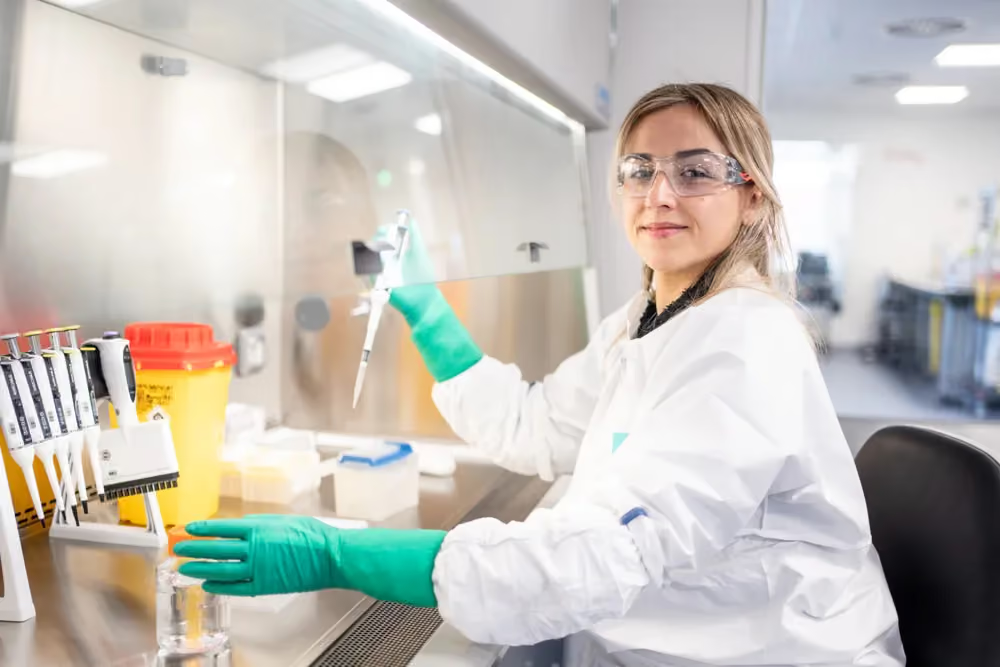
Ghent rises to 4th place in Europe and 10th worldwide when it comes to technology companies per capita. This emerges from a new global ranking. But which start-ups and growing companies, together already worth more than 61 billion euros, does the city count? We highlight some notable ones.
Every year, the company Dealroom produces a ranking of technology cities worldwide. Ghent reaches the global top. The city ranks 4th in Europe and 10th worldwide, measured against the number of inhabitants. There are 4 types of technology companies that have found a home in Ghent.
Spotable: ready-made quotes
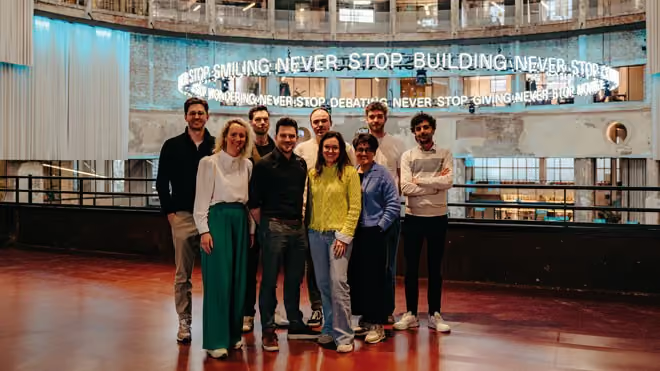
Ghent is strong in digital technology. It is the growth hub that attracts the most global attention in the technology sector. The Wintercircus has recently become the showcase for this kind of new young start-ups. These are mainly software companies providing services to other businesses (software as a service, or SaaS). Some of today's top entrepreneurs made their names in this type of application, the so-called "unicorns", companies now worth more than a billion dollars. They invest in and advise new companies.
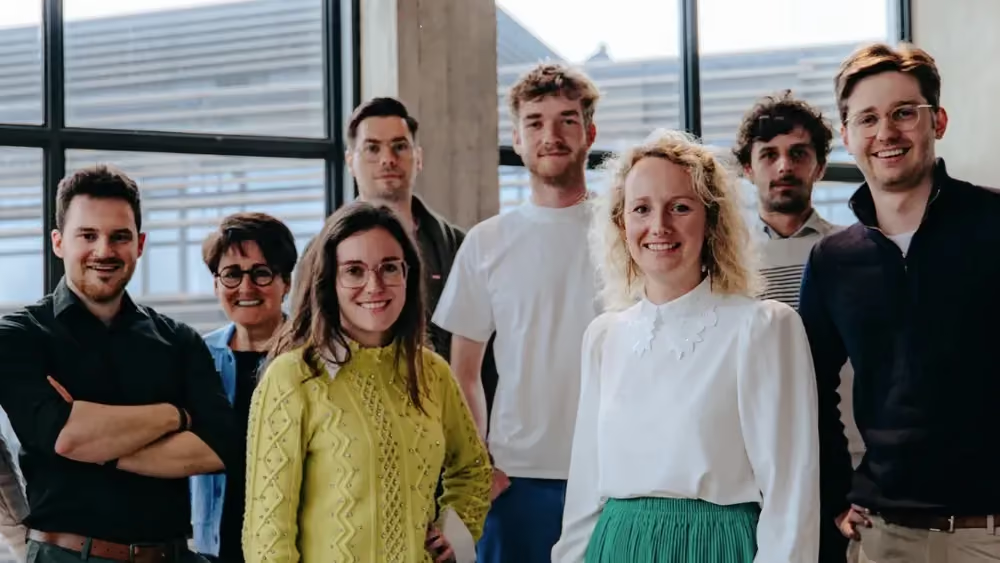
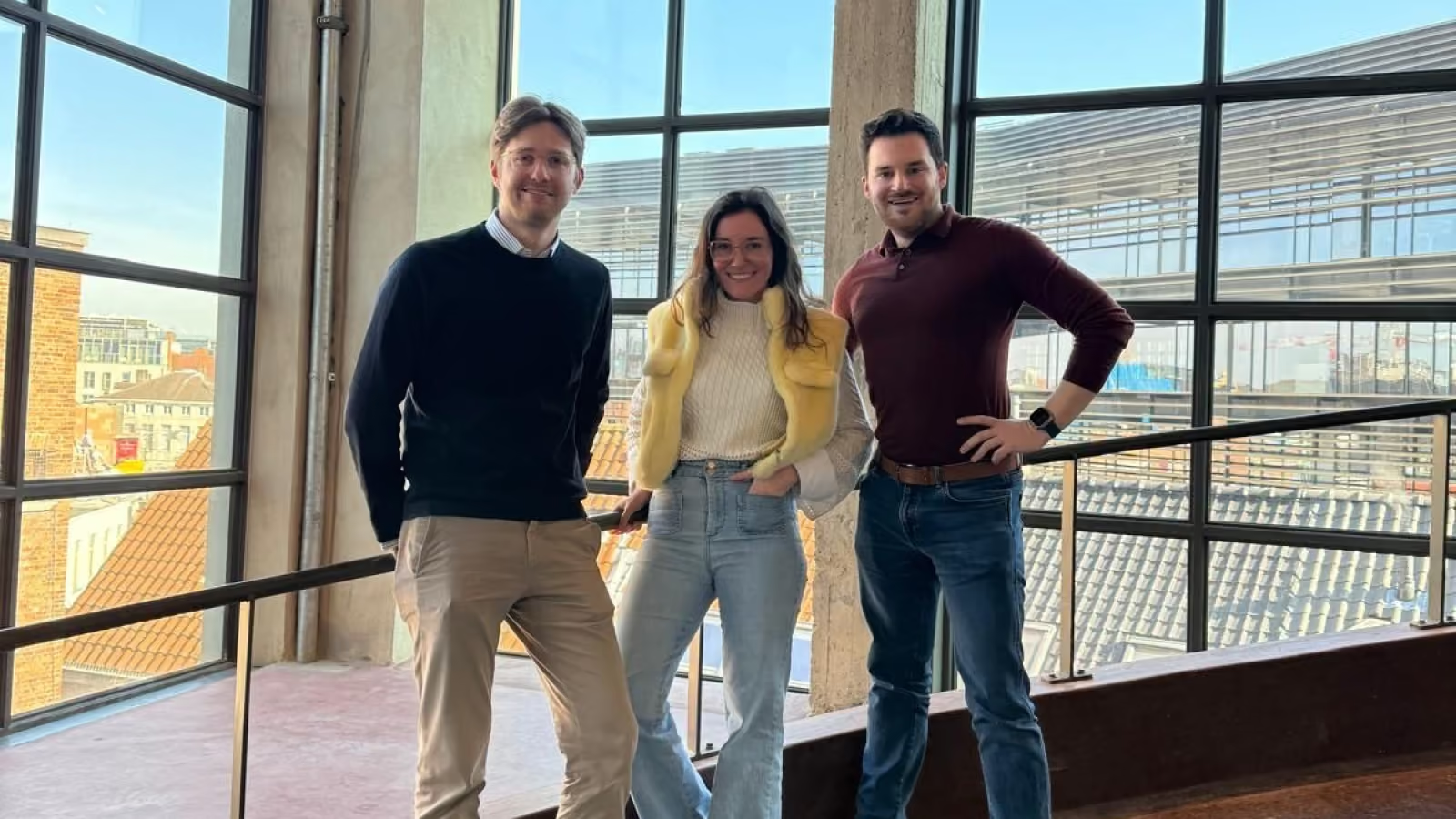
"We believe we can also become a 'unicorn'", laughs Julie Dumoulin of Spotable. The company started a year and a half ago as a start-up in the Wintercircus and now has around 30 employees. "We had to move because we had grown too large, with some regret. It is an inspiring environment where everyone offers advice." Spotable is active in Belgium, the neighbouring countries and the US.
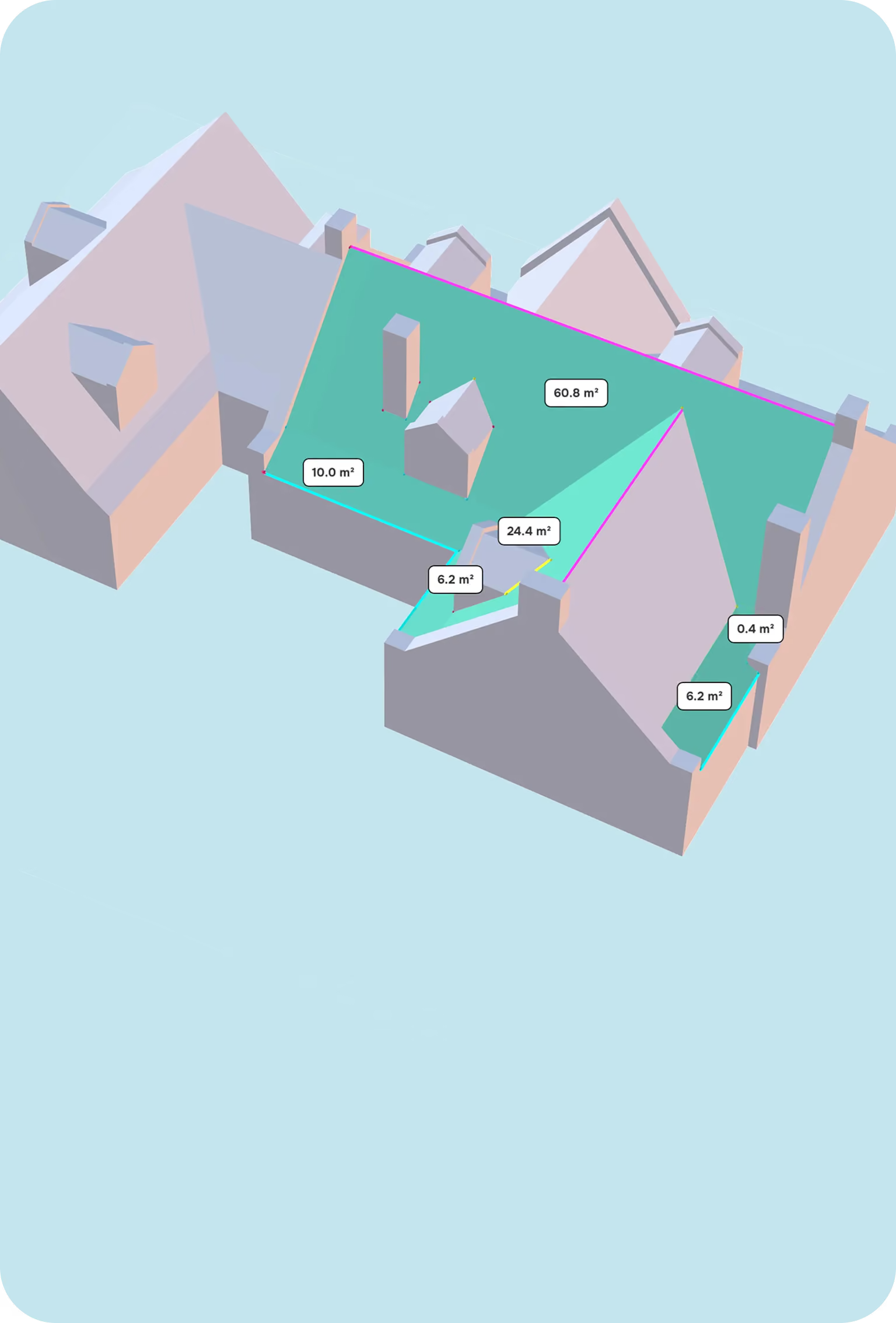
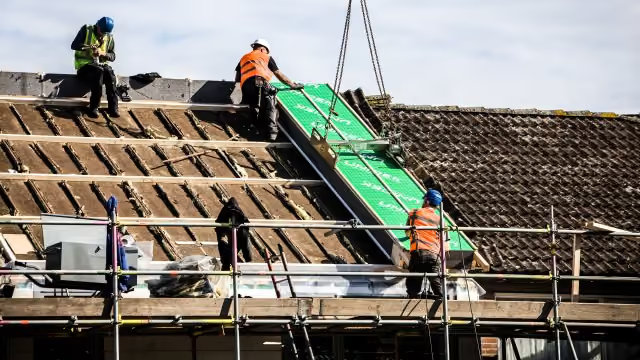
"We ensure that every renovation company can automatically and quickly send targeted quotes. Based on an address, we create a complete 3D model of a home and use that to draw up the quotes. Companies no longer need to do it themselves. We use public data, such as that from Google Maps, cadastral information, depth measurements... We apply our AI models to it. The aim was to make the construction sector more competitive by simplifying administration and sales. The sector was old-fashioned, everyone is now digitalising. It is moving extremely fast."
"There are a great many errors in the cadastre. We had to build our own.
-Julie Dumoulin, Spotable
Spotable now works together with wholesalers and suppliers of building materials. "We want to expand. Painters, landscaping companies and interior design companies are on the waiting list. In time, all of that must become possible too."
Dumoulin's system works so well that she herself detected errors in the cadastre. "There are a great many mistakes in it, we had to build our own cadastre", she laughs.
Spatial Dynamics: job applications with VR
Spatial Dynamics operates in a completely different sector, but belongs equally to digital tech. "We have people perform tasks with a VR headset in order to map their competencies", says founder Jelle Demanet. "We began more than 6 years ago with the first research at UGent, Imec and HOWEST. 2 years ago the company was founded to build a commercial application."
"For office job recruitment, there are already good systems to screen candidates, but that is less the case for technical profiles. We see candidates there who speak other languages, or do not always have the right qualifications. It is not easy to know whether they have the appropriate skills. By giving people assignments in a VR environment we can measure how well they can solve problems, whether they learn quickly, whether they dare to ask questions... The aim is to automatically know whether someone is suitable for a position or not."
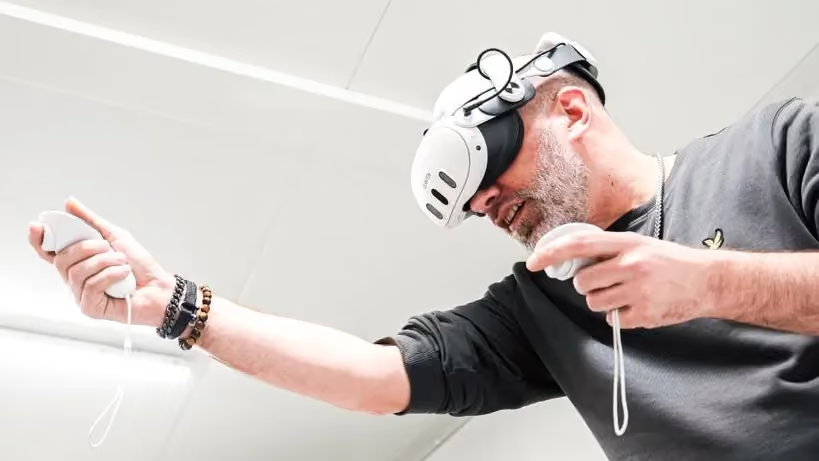
Demanet's company grows much less rapidly than Spotable. "We are now a team of 8. There are people who create the VR world. They have a background in the gaming industry. At the same time there are also people with psychological profiles. We are finalising the collaboration with Infrabel to recruit new signal operators. Flanders and Belgium are test cases; the aim is to scale up and also become a SaaS company."
"We are building a complete technical platform for data capture. An HR employee or recruiter will be able to follow everything live via a dashboard. We truly believe in it. Although we must not hesitate either, because other companies are working on similar applications."
BIO-INX: printing with living cells
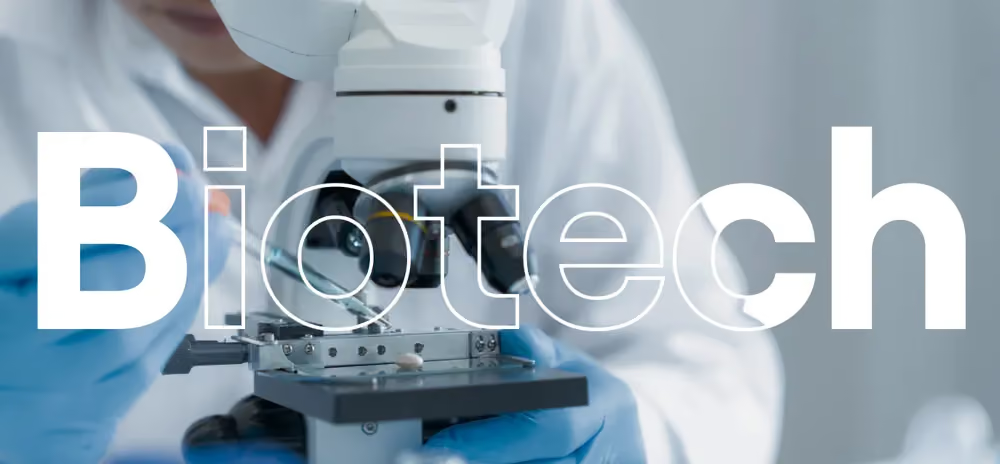
"We make bio-ink for 3D printers that can print tissue or cells. We can now print cartilage, bone and cornea. In addition, we can print human cells and insert them into chips to test things. It is an alternative to animal testing that is already being used by a customer in cancer research", says Jasper Van Hoorick of BIO-INX. The company has also contributed to research in space.
BIO-INX was founded as a spin-off of UGent and VUB. "It is the extension of my doctoral research. We were based for a long time at the Sterre in Ghent, but in 2022 the company was founded and we moved to the technology park in Zwijnaarde. We previously focused primarily on the academic market. The bio-ink can be used for research. The focus is now also shifting toward commercial applications."
BIO-INX now has around 10 employees. "We work closely with customers and develop on a custom basis. There had already been years of academic research into this application. The rest seemed like 'science fiction'. Someone must at some point take the step of starting a business, and that is what we did."
B-COS: vaccinating with bacteria
In the biotech sector there are many spin-offs. The biopesticide of B-COS fits into that category. The company activates the immune system of plants with carbohydrates from genetically modified bacteria. B-COS wants to bring the "plant vaccine" to market in 6 years.
"We make chains of sugar that we spray over plants or apply as a coating around seeds. We use modified bacteria as an alternative to substances that would otherwise have to be extracted from mushrooms or shrimps", says Chiara Guidi of B-COS.
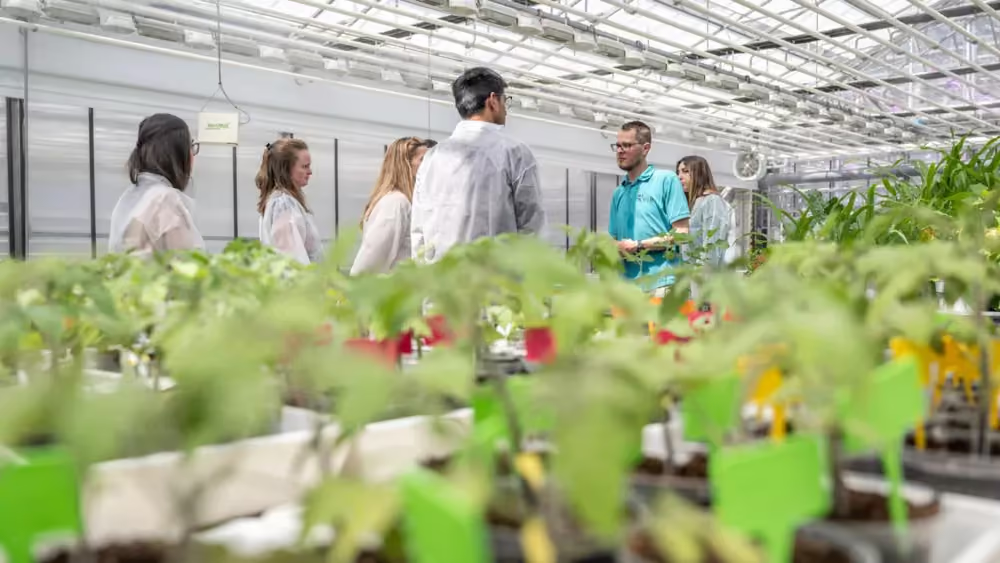
The technique works like a vaccine in humans. The immune system of the plants receives a boost, making them more resistant to diseases or pests. The advantage is that the substances used are biological. They therefore cause no follow-on damage after use.
B-COS is a typical example of a scale-up raising funds for further research and to enable larger production. Recently the company raised 1 million euros in support from various partners.
Amphistar: soap from bio-waste
Ghent also has heavy and polluting industry, particularly in the port. Great efforts are being made to reduce emissions and waste there. This is done by large companies themselves, but equally small start-ups are emerging.
Amphistar is by now a well-known player in the sector. This company too is a spin-off of UGent. It was founded in 2021 and now has 30 employees. "The preparatory research had actually been done much earlier, but the market was only then fully ready for it", says co-founder Sophie Roelandts.
Amphistar produces "biosurfactant". This is an important component of cleaning and personal care products. "It is found, for example, in shampoo and soap. It provides degreasing, shine and soft skin", explains Roelandts. The substance comes from bio-based waste streams, such as used frying oil or residues from brewing processes. "We add a kind of yeast to obtain that biosurfactant."
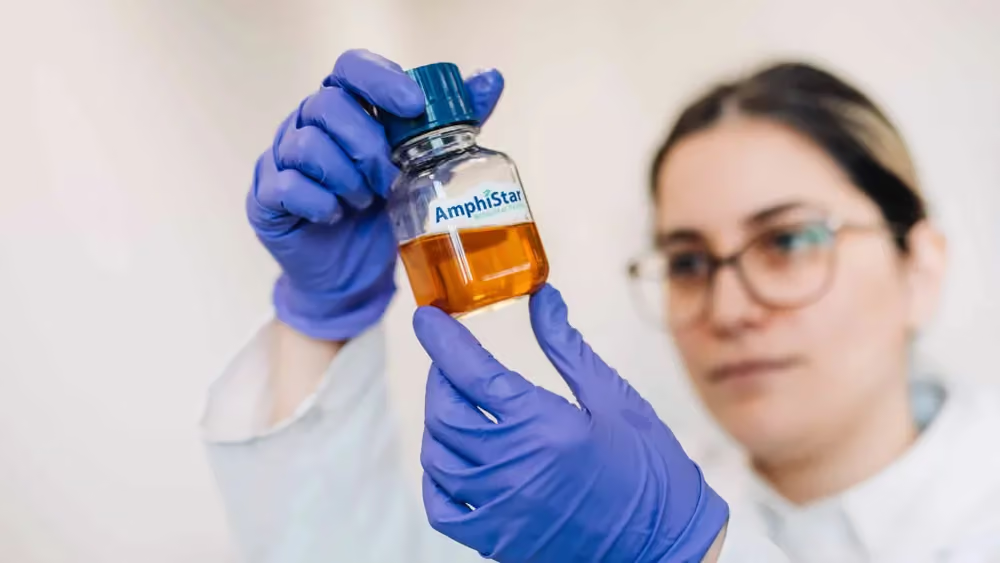
In Belgium a trial product from Ecover was briefly on the shelves, but that has since sold out. In Scandinavia there are shops selling products containing Amphistar's biosurfactant. "We supply large companies in the US and the EU. We have a small production facility, but by 2031 we want a factory where we can produce up to 20,000 tonnes per year."
"The zeitgeist has changed", Roelandts adds. "Products containing palm oil are a problem for far more consumers. The climate also plays a bigger role. We notice this and want to respond to it. We dream of a market in which every component of cleaning and personal care products will come from the bio-industry. Once our factory is running continuously, we will also be able to bring prices down."
Bright Energy: smart energy on construction sites
"We supply smart battery systems in the construction sector and for events", says Damien Van Durme of Bright Energy. "We monitor and manage energy use at temporary locations. By deploying batteries, we can replace diesel generators and absorb large peaks. It is above all the smart software that manages all of this, which makes Bright Energy unique. That is also the tech element of the company."
"Even on very small grid connections we can run fairly large construction sites. You really do need to be able to deliver in order to run a tower crane, for example. We have worked very hard ourselves on this system, including on a smart inverter."
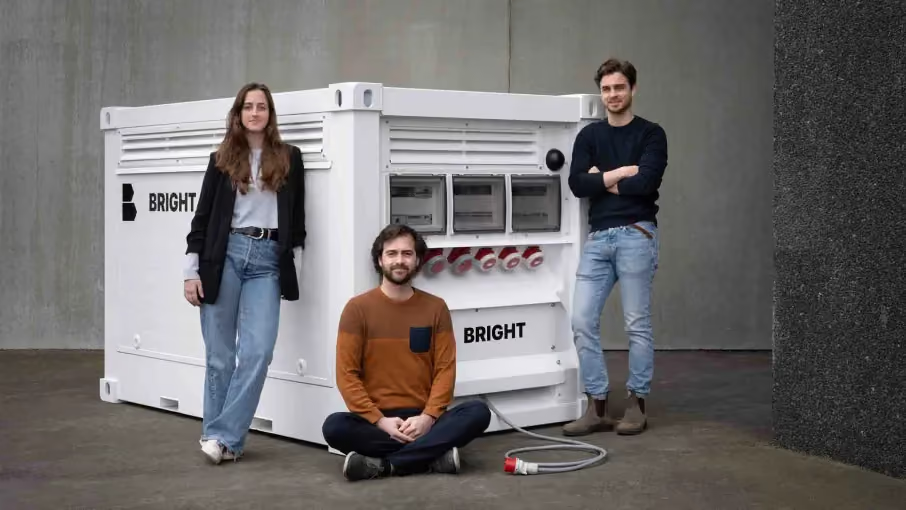
The company is a start-up from UGent. "Arne, Sam and Lisse Van Acker started it about 7 years ago", says Van Durme. It is in fact also something of a family project that got out of hand. "We now have nearly 20 employees. In Belgium we are well established. We are now looking mainly at the Netherlands and France. There we will work further with local distributors who can offer our service."
Morrow: reading glasses at the press of a button
"We make glasses that can switch electronically at the press of a button", says CEO Frederiek Ysebaert of Morrow. From an "ordinary" pair of glasses, the device switches to a "reading pair". The technology works with liquid crystal. The company has a pilot factory in Zwijnaarde where the first models are coming off the line. The glasses are available in around 10 locations. "They cost no more than any other pair of progressive lenses", says Ysebaert.
This company too is a spin-off and was already founded in 2016. "The product continues to develop. We recently organised a wearer trial and 350 people signed up for 50 places. That shows the great interest. It is of course something that many people encounter at a certain point in their lives."
Interest in the company is substantial. "We are not the only player working on this, but we do have a 3-year lead on our competitors", says Ysebaert. 2 international eyewear companies (Zeiss and Tokai) have since become shareholders in Morrow.
"Nevertheless we continue to tell an entirely Belgian story. The research, development and production all take place in our own country. That is something we are proud of", Ysebaert emphasises.
Originally appeared on VRT NWS: https://www.vrt.be/vrtnws/nl/2026/05/26/gent-technologie-innovatie-cleantech-digital-biotech-healthtech/

Other
Press Releases
The latest industry news, interviews, technologies, and resources.